A versatile set of manufacturing methods capable of producing accurate, dependable parts for a wide range of needs. From early-stage prototypes to finished production components, these processes offer flexibility in design, materials, and scale, making them suitable for diverse industries and applications.
Vacuum Casting
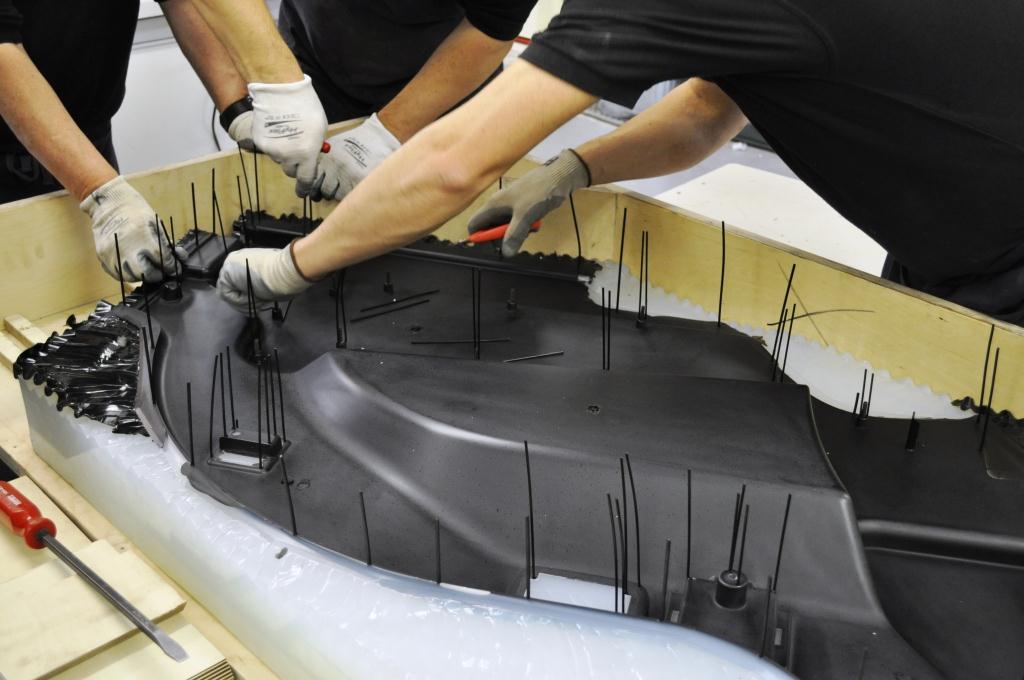
Vacuum Casting uses silicone moulds and a vacuum chamber to create highly accurate, detailed parts from resin. The process removes air bubbles for smooth finishes and precise replication, making it ideal for prototypes or low-volume production.
It can produce rigid, flexible, or transparent parts that closely match the appearance and performance of injection moulded components, but with shorter lead times and lower costs.
RIM involves mixing two liquid components and injecting them into a mould where they chemically react and cure. This creates strong, lightweight parts with excellent surface quality, suitable for large or complex shapes in low to medium production volumes.
Common in automotive and industrial applications, RIM can incorporate inserts, vary wall thickness, and offer design flexibility not easily achieved with traditional moulding methods.
Silicone Moulding uses flexible silicone rubber to create moulds capable of capturing intricate details and complex shapes. These moulds are ideal for casting resins, waxes, foams, and other materials, producing parts with high accuracy and surface quality.
The flexibility of silicone allows for easy demoulding, making it perfect for prototypes, short runs, and applications where precision and surface finish are key.